


The Central Coast has become one of the most popular places in NSW to build a granny flat — and it is easy to see why. Property blocks tend to be larger than in inner Sydney, the region is growing fast, and rental demand for smaller dwellings is strong. Whether you are housing an ageing parent, generating rental income, or simply making better use of your backyard, a granny flat is one of the most practical investments you can make on a Central Coast property.
This guide covers everything you need to know: whether your property qualifies, how approval works under Central Coast Council, what it will cost, what design options are available, and how to choose a builder who will manage the process from start to finish.
Is My Central Coast Property Eligible for a Granny Flat?
Before any building or approval work begins, your property needs to meet the eligibility requirements set out under the State Environmental Planning Policy (Housing) 2021. For most Central Coast homeowners, the key criteria are:
- Your land must be at least 450 square metres
- The property must be zoned residential — R1, R2, R3, or R5 on the Central Coast
- Someone must be living in the main house — granny flats cannot be built on unoccupied land
- You can only have one secondary dwelling on a single property
Your 10.7 Planning Certificate is the document that tells you everything you need to know about your specific block — its zoning, any bushfire, flood, or heritage overlays, and whether there are any issues that would affect the approval process or the cost of the build.
On the Central Coast, some areas near the foreshore, in bushfire-prone land, or in heritage precincts carry additional requirements. These do not automatically prevent you from building — but they do affect which approval path applies and may add to the overall cost. Identifying these early, during the site inspection stage, is the best way to avoid surprises later.
Check your property’s eligibility: amescorp.com.au/eligibility/
Granny Flat Approval on the Central Coast: CDC or DA?
The Central Coast is governed by Central Coast Council — a single council that covers the former Gosford and Wyong council areas. Granny flat approval on the Central Coast follows the same NSW-wide framework as the rest of the state: you need either a Complying Development Certificate (CDC) or a Development Application (DA).
Complying Development Certificate (CDC)
A CDC is assessed by a private certifier and is the faster of the two pathways. On eligible properties, CDC approval can be granted in as little as 10 days. To use this pathway, your property and the proposed granny flat must fully comply with the SEPP (Housing) 2021 rules — including setbacks, height limits, and land size.
Most standard residential properties on the Central Coast that sit in an R1 or R2 zone and are clear of major overlays will be eligible for CDC approval.
Development Application (DA)
A DA goes through Central Coast Council and takes longer — typically 6 to 8 weeks or more. You will generally need a DA if your property sits in a bushfire zone, flood zone, or heritage area, or if the proposed design does not fully comply with SEPP requirements.
A DA allows the council to consider your application on its individual merits. It takes more time, but it does not necessarily mean rejection — many Central Coast granny flats are built through the DA pathway each year.
Central Coast Council Areas: Quick Approval Reference
| Area | Typical Zoning | Approval Path | Notes |
| Central Coast Council | R1, R2, R3, R5 (check your 10.7 cert) | CDC available on eligible sites | 650m+ of foreshore may trigger additional conditions |
| Gosford area (Central Coast Council) | R2 Low Density residential typical | Most eligible for CDC | Some heritage and flood overlays apply — check early |
| Wyong area (Central Coast Council) | R1, R2 common residential zones | CDC or DA depending on site | Some bushfire zone properties require additional reports |
How Much Does a Granny Flat Cost on the Central Coast?
Build costs on the Central Coast are broadly in line with greater NSW. The main variables are the size of the granny flat you choose and the specific conditions of your site — particularly slope, soil type, and how easy it is to connect to existing services.
The following cost guide is based on current Amescorp data (sourced from amescorp.com.au, May 2025). These are indicative ranges — your actual cost will depend on your design choices and site conditions. Always obtain a detailed fixed-price quote before committing.
| Granny Flat Type | Typical Cost (NSW/Central Coast) | Notes |
| Studio (36 sqm) | From $140,000 (approx.) | Entry-level, ideal for home office or single occupant |
| 1 Bedroom (60 sqm) | $160,000 – $180,000 | Most popular choice on the Central Coast |
| 2 Bedroom | $170,000 – $200,000 | Suits families, couples, or rental income |
| 3 Bedroom | $175,000 – $210,000 | Larger footprint; site assessment required |
| 2 Storey | $290,000 – $330,000 | Complex build; limited to suitable blocks |
| Site costs (variable) | $5,000 – $30,000+ | Slope, soil, sewer location — varies by site |
| Council / approval fees | $3,000 – $8,000 (approx.) | CDC generally cheaper & faster than DA |
What Affects the Final Cost on the Central Coast?
- Block slope and soil type: Sloping blocks require excavation and retaining walls. Rocky or reactive clay soils need specialised foundations.
- Sewer and service connections: The location of your sewer main relative to the proposed build affects connection costs — your sewer diagram tells the builder this before any work starts.
- Design choice: Selecting from Amescorp’s range of named designs is typically more cost-effective than a fully custom build.
- Approval path: CDC is generally faster and less expensive than a DA. Properties requiring a DA may incur higher approval costs and longer wait times.
- Bushfire or flood zone: Properties in these zones may require specialist consultant reports and upgraded materials, which add to the cost.
Granny Flat Design Options for Central Coast Properties
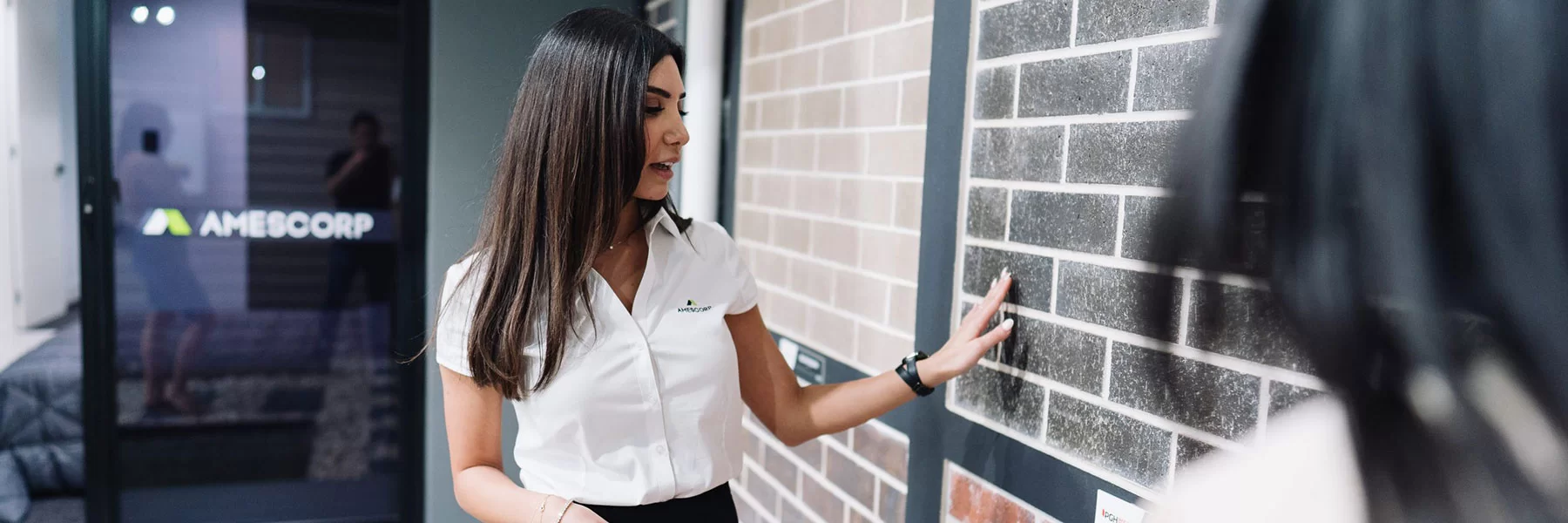
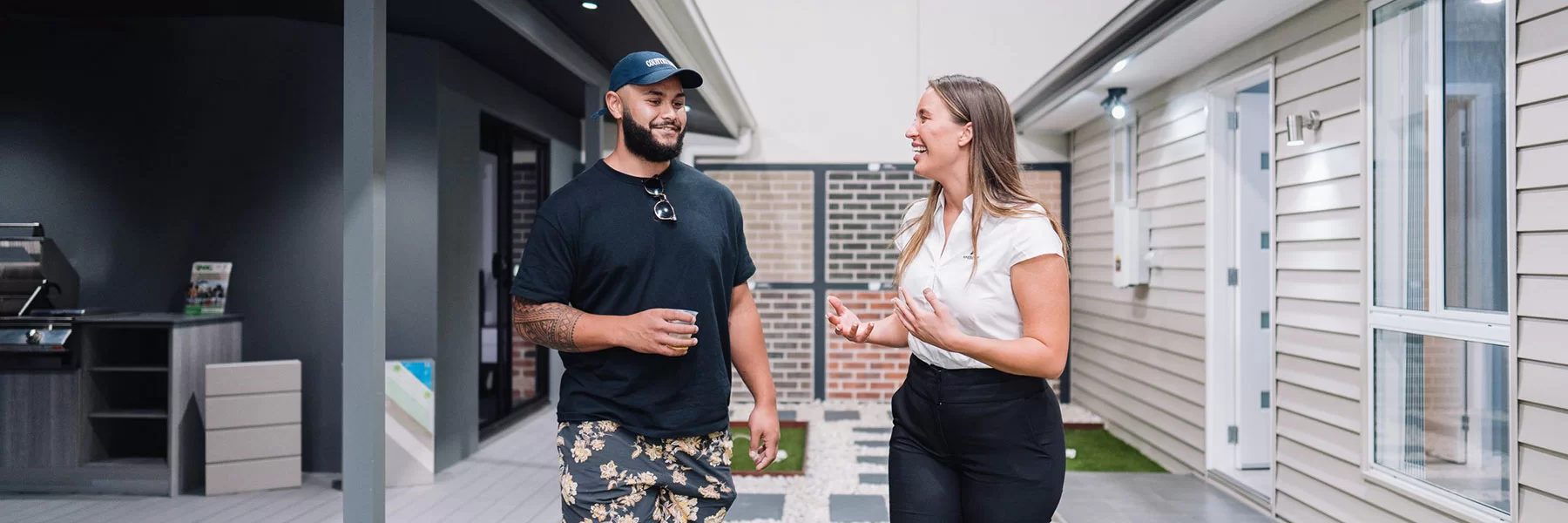
Amescorp offers a range of named granny flat designs across one, two, and three-bedroom configurations — each available to view in person at their showroom before you commit.
1-Bedroom Designs
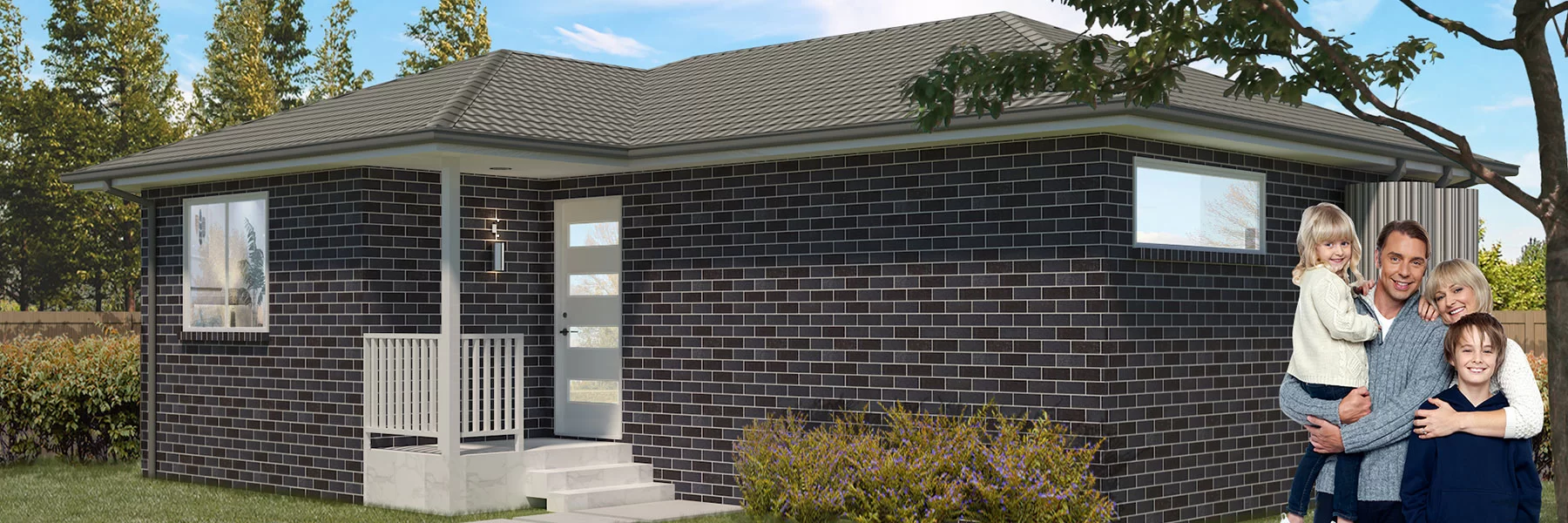
One-bedroom granny flats are the most popular choice for Central Coast homeowners. They are well-suited to a single occupant, an ageing parent, an adult child, or as a rental property. Amescorp’s one-bedroom range includes designs such as Vanessa and Xavier.
2-Bedroom Designs
Two-bedroom designs suit couples, small families, or homeowners who want more flexible rental appeal. Amescorp’s two-bedroom range is the largest in their portfolio, with designs including Alison, Amelia, Avielle, Axel, Azalea, Ben, Bradley, Cameron, Carl, Eden, Grace, Gemma, and many more.
3-Bedroom Designs
Three-bedroom granny flats offer the most space and are suited to larger blocks. Amescorp’s three-bedroom range includes George, Ivana, and Richard.
The Build Process: From Site Check to Handover
Amescorp manages every stage of the build on your behalf — from the first eligibility check through to handing over the keys. Here is how the process works:
- Online assessment, — Amescorp reviews your property details, sewer diagram, flood maps, and zoning before visiting your site.
- Free site inspection and fixed-price proposal — A consultant visits your Central Coast property, assesses site conditions, and provides a full fixed-price quote. You are then invited to visit the showroom.
- Design finalisation — You work with Amescorp’s architect and design team to finalise your chosen design. Changes can still be made before moving forward.
- Approval stage — Amescorp prepares all required documents — architectural plans, structural and hydraulic engineering reports, BASIX certificate — and lodges for CDC or DA approval on your behalf. You make your colour and material selections during this stage.
- Construction — Building begins on the approved plans. Your dedicated Amescorp contact keeps you informed throughout. Construction typically takes around 4 months from start to handover.
- Handover — Amescorp hands over the keys and all documentation. Your granny flat is ready to use — whether for family, rental, or whatever purpose suits you best.
Why the Central Coast Is a Smart Place to Build a Granny Flat Right Now
The Central Coast sits in a strong position for granny flat investment. A few reasons this region makes particularly good sense:
- Strong rental demand: The region has seen consistent population growth and demand for smaller rental dwellings has grown alongside it.
- Larger blocks: Central Coast properties tend to offer more land per title than inner-Sydney equivalents, which means more properties are eligible and there is more flexibility in placement.
- Affordability relative to Sydney: Building costs on the Central Coast are broadly comparable to Sydney, but the rental yield and property value uplift case can be strong in a market where demand for secondary dwellings continues to grow.
- Lifestyle flexibility: Many Central Coast homeowners are building granny flats to accommodate ageing parents or adult children — keeping family close without crowding the main house.
Frequently Asked Questions
Can I build a granny flat on the Central Coast?
Yes. Most residential properties on the Central Coast in R1 to R5 zones can accommodate a granny flat, provided the land is at least 450 square metres and the main dwelling is occupied. Your builder should assess your property’s eligibility before you commit to anything.
What council covers the Central Coast for granny flat approvals?
The Central Coast is governed by Central Coast Council, which covers both the former Gosford and Wyong local government areas. Approval is obtained either through a Complying Development Certificate (CDC) via a private certifier, or a Development Application (DA) through Central Coast Council.
How much does a granny flat cost on the Central Coast?
Based on current Amescorp data, a one-bedroom granny flat on the Central Coast typically ranges from $160,000 to $180,000, two-bedroom from $170,000 to $200,000, and three-bedroom from $175,000 to $210,000. Site costs and approval fees are additional and vary by property. Request a free site inspection for a fixed-price quote specific to your block.
How long does it take to build a granny flat on the Central Coast?
Once approval is in place, construction typically takes around 4 months (approximately 16 weeks) from start to handover. The approval stage — CDC or DA — adds additional time before construction begins. Your builder should provide a realistic timeline based on your specific site and approval path.
Can I rent out my granny flat on the Central Coast?
Yes. In NSW, a secondary dwelling can be rented to anyone — not just family. You must have the correct approval (CDC or DA) in place before renting the property.
Does Amescorp build granny flats on the Central Coast?
Yes. Amescorp is a second-generation family-owned builder that works across Sydney and the Central Coast. They manage the full process — eligibility check, design, approval, construction, and handover — and offer a free site inspection and fixed-price proposal.