




Choosing the right granny flat builder in Sydney is one of the most important decisions you will make once you have decided to build. Get it right, and the process is smooth, the price is predictable, and the finished product matches what you were promised. Get it wrong, and you could face cost blowouts, approval delays, substandard workmanship, and a builder who is hard to reach once problems arise.
Sydney has a lot of builders who will tell you they build granny flats. Fewer of them have the licensing, insurance, systems, and experience to manage an end-to-end build properly. Here is what to look for before you sign anything.
1. A Current NSW Contractor Licence
This is non-negotiable. In NSW, any builder carrying out residential construction work must hold an active contractor licence issued by NSW Fair Trading. The licence must be current — not expired — and must cover the type of work being done.
Do not take the builder’s word for it. Go to the NSW Fair Trading website and verify the licence number yourself before you have any further conversation. A legitimate builder will give you their licence number immediately and without hesitation.
| Verify any NSW builder’s contractor licence independently at fairtrading.nsw.gov.au — search under ‘Contractor Licences’. If a builder cannot or will not provide their licence number upfront, that is the end of the conversation. |
Also check whether the licence covers the full scope of the work. Some licences are limited to specific categories of construction. A granny flat involves structural, hydraulic, and electrical work — your builder’s licence should reflect that.
2. Up-to-Date Insurance — Both Types
Licensing and insurance are separate requirements, and both matter. Ask any builder you are considering to provide current certificates for:
- Public liability insurance — covers damage to your property or third-party injuries that occur during the build
- Home warranty insurance (home building compensation) — required in NSW for residential building work over $20,000. It protects you if the builder becomes insolvent, dies, or disappears before completing the work or rectifying defects
A reputable builder will provide these certificates without being pushed. If a builder is vague about their insurance or delays producing documentation, treat that as a serious warning sign.
3. A Written Fixed-Price Contract
One of the most common ways homeowners lose money on a granny flat build is through a contract that allows costs to increase once construction is underway. A variation here, an unexpected site charge there — and a quote that seemed reasonable becomes something else entirely.
Before you sign anything, confirm that the contract is:
- Fixed-price — not an estimate or a cost-plus arrangement
- Inclusive of all site costs identified during the site inspection
- Inclusive of all inclusions — fixtures, finishes, appliances
- Clear on what the approval fees cover and what is outside scope
- Signed by both parties before any work begins
Pay close attention to prime cost (PC) items and provisional sums — these are placeholders in the contract for costs that have not yet been finalised. They are estimates, and the final figure can be higher. Know where these appear in your contract and what the allowances are before you commit.
| Amescorp provides a fully itemised fixed-price proposal after a free site inspection — including site costs, inclusions, and approval fees — before you commit to anything. |
4. A 6-Year Structural Guarantee in Writing
Under the Home Building Act 1989 (NSW), all licensed residential builders are legally required to provide:
- A 6-year statutory warranty for major structural defects
- A 2-year warranty for non-structural defects
This is the minimum required by law. Ask specifically whether this is included in your contract and make sure it appears in writing — not just as a verbal assurance. A builder who is confident in the quality of their work will have no issue putting their guarantee on paper.
Amescorp backs every build with a 6-year structural guarantee, stated in writing as part of every contract — in line with the requirements of the Home Building Act 1989 (NSW).
5. Full Approval Management — CDC or DA
In Sydney, a granny flat requires either a Complying Development Certificate (CDC) from a private certifier or a Development Application (DA) through your local council. The approval process involves multiple documents — architectural plans, structural and hydraulic engineering reports, BASIX certificates — and varies depending on your property’s zoning and any overlays.
A builder who manages this process from start to finish is worth significantly more than one who leaves you to navigate the paperwork. Ask specifically:
- Do you prepare all required plans and engineering reports?
- Do you lodge the application with the certifier or council on my behalf?
- Do you manage the entire process through to approval?
- What happens if the application requires additional information or amendments?
The approval process in Sydney can vary significantly between the 30-plus local councils. Your builder should understand the landscape in your specific council area and know what to expect.
6. A Proper Site Inspection Before Any Quote
A credible builder will not quote a fixed price without visiting your property first. The condition of your land — its slope, soil type, accessibility, and sewer location — has a direct and material impact on what the build will cost. No builder can responsibly give you a fixed price without seeing the site.
Be cautious of any builder who provides a detailed quote over the phone or online without a physical visit. These quotes are almost always incomplete and will be subject to significant revision once site conditions are assessed.
Equally, the site inspection should cover more than just a look around the backyard. A thorough inspection includes reviewing your Title Search, Sewer Diagram, and 10.7 Planning Certificate — the three documents that determine your eligibility, approval path, and any site-specific cost flags.
7. A Real Portfolio of Completed Projects
Any builder can show you renders and design concepts. What you want to see is actual completed granny flats — finished builds you can look at, or ideally visit in person.
A strong portfolio demonstrates consistent quality across different sites, block types, and design configurations. When reviewing a builder’s work, look for:
- Variety across 1, 2, and 3-bedroom configurations
- Completed projects on blocks with similar conditions to yours — slope, access, suburb type
- Quality of finishes that you can see clearly in photos or in person
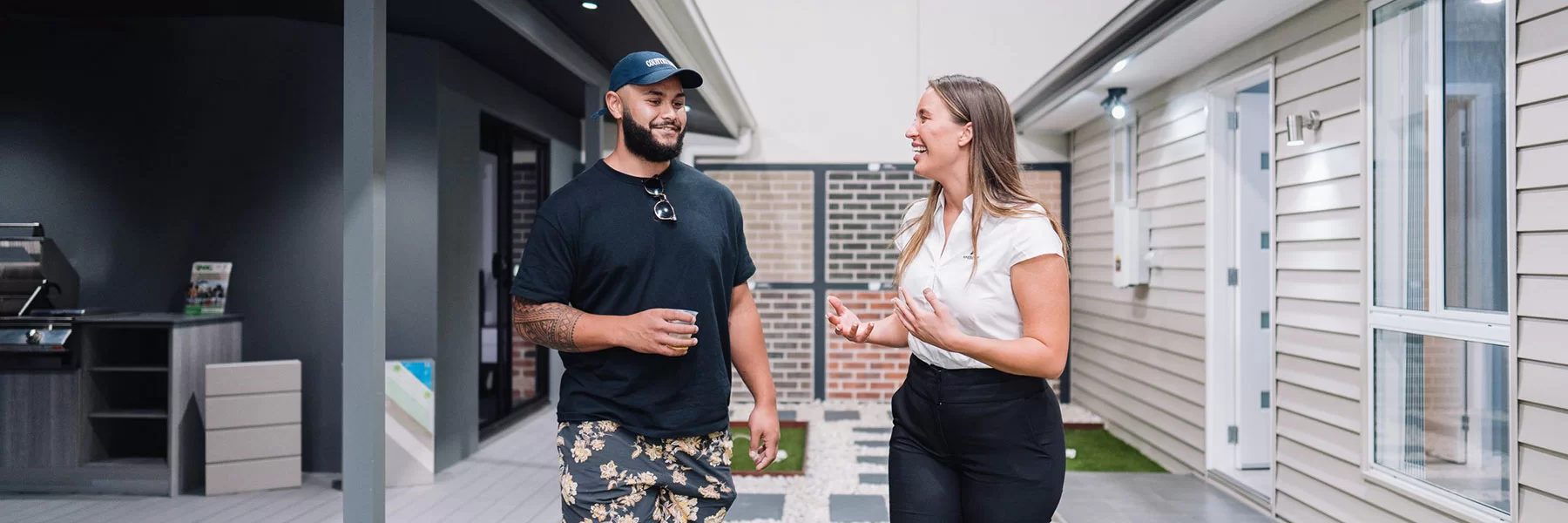
Amescorp has a publicly available portfolio of completed granny flats across Sydney. More importantly, they have two complete, fully fitted display granny flats at their Glendenning showroom that you can walk through before making any decision. That level of transparency is rare in the industry.
8. A Clear Communication Process Throughout the Build
A granny flat build takes around 4 months from the start of construction to handover. During that time, you should never feel like you are chasing someone for updates on your own project. Before signing, ask:
- Who is my dedicated point of contact from start to finish?
- How will I be updated on construction progress?
- What is the process if I have a concern or question during the build?
- How are variations to the original scope handled and communicated?
The answer should be specific and clearly explained. Vague answers like ‘we keep you in the loop’ are not good enough. You want to know exactly who is responsible for communicating with you, how often, and through what channel.
Amescorp assigns every client a dedicated contact who knows the details of their build and is available to answer questions throughout the entire project — from the first site visit to the day keys are handed over.
Quick Reference: Green Flags vs Red Flags
Use this table when assessing any Sydney granny flat builder before you commit:
| What to Check | Green Flag ✓ | Red Flag ✗ |
| Licence | Active NSW contractor licence — verified on NSW Fair Trading | No licence number offered or licence expired |
| Insurance | Public liability + home warranty certificates provided on request | Vague about insurance or unable to produce certificates |
| Contract | Written fixed-price contract with full inclusions list | Verbal quote only, or price subject to change |
| Structural guarantee | 6-year structural guarantee stated in the contract | Warranty only mentioned verbally, not in writing |
| Approval management | Builder manages the full CDC or DA process on your behalf | You are left to manage council or certifier yourself |
| Site inspection | Free site inspection before any commitment | Quote issued without visiting your property |
| Portfolio | Real completed projects with addresses you can visit | Renders and stock photos only — no verifiable completed work |
| Showroom | Display flat available to visit before you commit | No physical evidence of finished work available |
| Communication | Dedicated contact available throughout the build | No clear point of contact or update process explained |
| Timeline | Realistic, written construction schedule provided | Vague timeline with no milestones or schedule |
10 Questions to Ask Before You Sign
Take this list with you to any builder meeting:
| Question to Ask | Why It Matters |
| Can I see your NSW contractor licence number? | Any reputable builder provides this without hesitation |
| Do you carry public liability and home warranty insurance? | Both are required for residential builds over $20,000 in NSW |
| Will I receive a fixed-price contract? | This is your main financial protection — insist on it in writing |
| What is your 6-year structural guarantee process? | NSW law requires it; confirm it is in your contract, not just verbal |
| Do you manage the full approval process — CDC or DA? | Saves you significant time and ensures nothing is missed |
| Who is my dedicated contact throughout the build? | You should never be chasing updates on your own project |
| Can I visit the showroom or a completed project? | Seeing finished work firsthand is the best quality check available |
| Can you provide references from recent clients? | A confident builder will have no hesitation connecting you with past clients |
| What does your build schedule look like? | Understand key milestones and what triggers each stage payment |
| What is your process for managing variations? | Know how changes are approved, documented, and priced before the build starts |
Common Mistakes Sydney Homeowners Make When Choosing a Builder
- Not verifying the licence independently. Always check NSW Fair Trading yourself. Do not accept a licence number you have not confirmed is active.
- Choosing on price alone. A significantly lower quote often means something important is missing — site costs, approval fees, or quality inclusions. Always compare against a full fixed-price contract with a complete inclusions list.
- Skipping the site inspection. No quote is reliable without a physical site inspection. Block access, slope, and sewer location can all significantly affect cost.
- Accepting verbal guarantees. A warranty means nothing if it is not written into your contract. The 6-year structural guarantee is a legal right — make sure it is documented.
- Not visiting a completed build. Photos do not show you finishes, material quality, or the feel of a finished space. Visit a showroom or completed project before committing.
- Assuming all Sydney councils are the same. Processing times, local policies, and overlay requirements vary between Sydney’s 30-plus councils. Your builder should understand the specific landscape for your property.
Frequently Asked Questions
What licence should a granny flat builder have in Sydney?
In NSW, a granny flat builder must hold an active contractor licence from NSW Fair Trading. Verify any builder’s licence independently at fairtrading.nsw.gov.au before signing anything. The licence must be current and cover the type of residential building work being done.
What insurance should a granny flat builder carry in NSW?
Your builder must carry current public liability insurance and home warranty insurance (home building compensation). In NSW, home warranty insurance is required for residential work over $20,000. Ask to see current certificates for both — a reputable builder will provide them immediately.
What is a fixed-price contract and why does it matter?
A fixed-price contract locks in your total build cost before construction begins. It should include a full inclusions list, site-specific costs, and approval fees. Without it, your costs can increase once construction is underway. Always insist on a written fixed-price contract before committing to any builder.
What warranty should a granny flat builder provide in NSW?
Under the Home Building Act 1989 (NSW), builders are legally required to provide a minimum 6-year structural guarantee and a 2-year non-structural defects warranty. Make sure this is written into your contract — not just mentioned verbally.
How do I check if a Sydney granny flat builder is licensed?
Visit fairtrading.nsw.gov.au and use the contractor licence check tool. Search by the builder’s name or licence number. Do this independently — do not rely on the builder’s own assurances.
Should my builder manage the council approval process?
Yes. A reputable Sydney granny flat builder should manage the entire approval process — CDC or DA — on your behalf. This includes preparing all plans, engineering reports, BASIX certificates, and lodging with the certifier or council. You should not need to handle any paperwork yourself.